
History
A Little History Of The Park
1862: Cheyenne Mountain opens for homesteading after the Homestead Act.
1880–1890: John Lytle engages in cattle ranching on the lower portion of Cheyenne Mountain.
1890: Lida M. Touzalin and sister buy the property from John Lytle.
1936–1961: The Jones family acquires the property, expands it to 2,200 acres, and starts the JL Ranch.
1957: A T-33 military training jet crashes into Cheyenne Mountain, killing both pilots. Debris from the wreckage is still scattered throughout the crash site on Cheyenne Mountain.
1961: NORAD's Combat Operations Center construction in 1961 leads to JL Ranch's relocation to Montana due to water issues.
1966: The Combat Operations Center becomes operational for early nuclear-attack detection. The underground operations center covers 4.5 acres and houses 11 buildings, providing a combined 200,000 square feet of floor space. It has its own power plant and four reservoirs, with a total capacity of 1.5 million gallons of water, but relies on Colorado Springs for its water supply.
1981–2000: Denman Investments of Vancouver, B.C. owns and leases the JL Ranch to smaller ranching operations.
June 2000: Almost exactly 63 years from the day that Lloyd and Dorothy Jones purchased the first parcel of the property, 1,680 acres of the former JL Ranch (all south of NORAD Road) are purchased for the creation of Cheyenne Mountain State Park through a partnership between the City of Colorado Springs, Colorado Parks & Wildlife, Great Outdoors Colorado (GOCO), Colorado Lottery, El Paso County and other local private organizations. The northern 520 acres are retained by Denman Investment Corp. Previously, the entire ranch had been slated for extensive residential and commercial development.
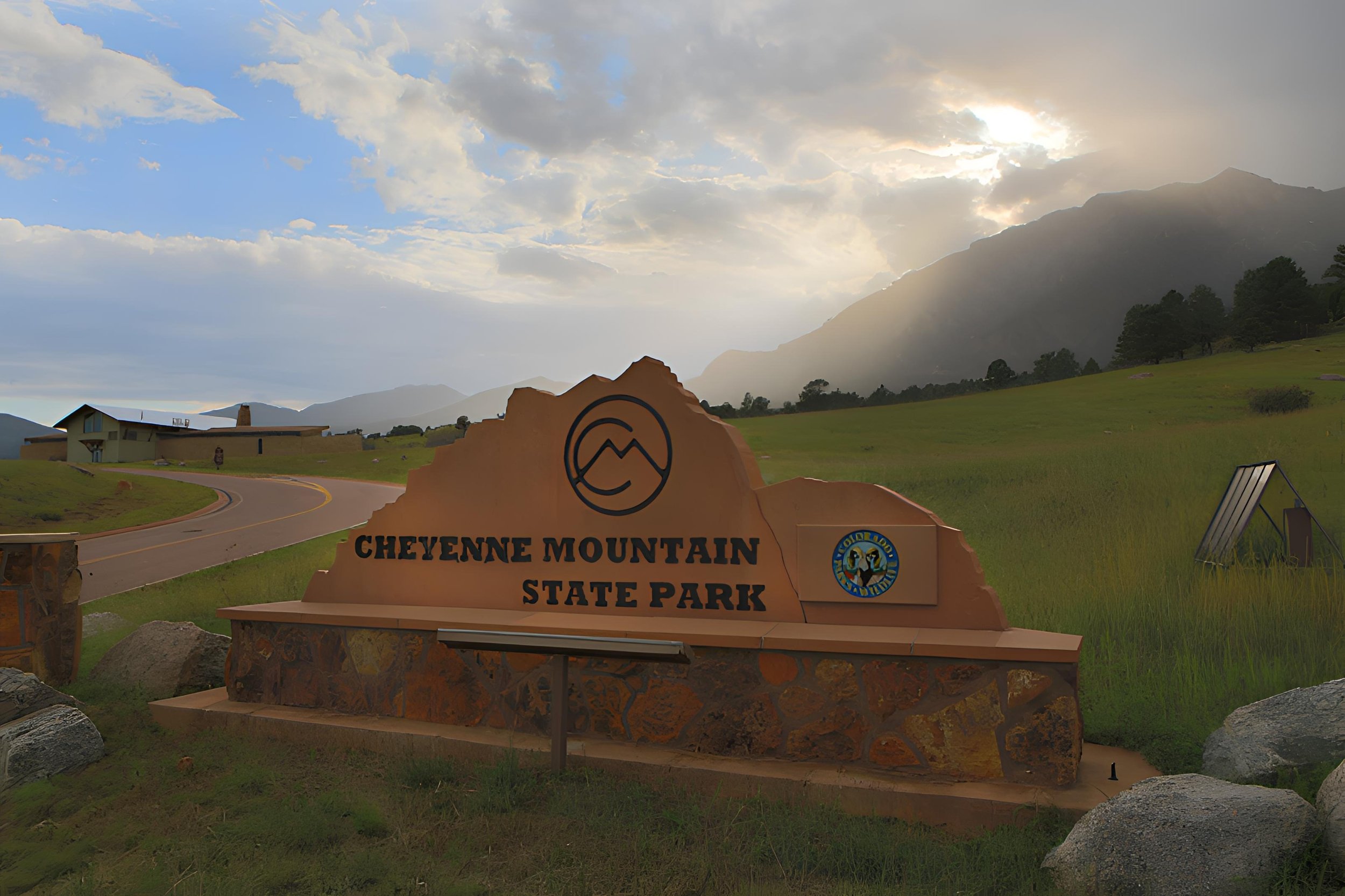
The park is nestled against the eastern flank of Cheyenne Mountain just south of Colorado Springs. It represents the protection of one of the last important open spaces along the southern section of the Colorado Front Range and offers a stunning transition from Colorado’s plains to its peaks. Wildlife viewing opportunities abound because the property has been relatively undisturbed.